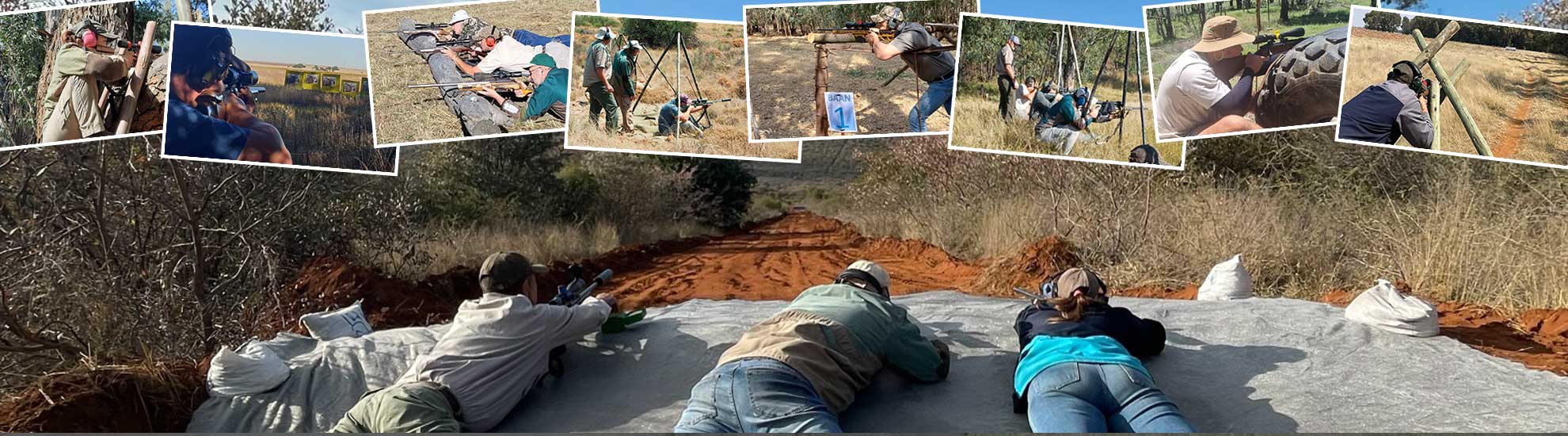
This is the sport for the hunter; it's the closest you will find to real hunting, and designed exclusively as a test for hunters with 222-223 rifles under hunting conditions.
The purpose of the competition is to test and promote a hunter's abilities: the shooter's ability to judge distance, knowledge of the bullet's external ballistics, judging wind strength and the influence of the wind on the bullet's path, ability to shoot from various positions and also shooting under pressure (against time limits). The competition is structured so that all the above elements are tested during an event. It is a shooting contest of variable and non-standard format that examines practical marksmanship as it occurs in the field. The competitor is ultimately tested on correct shot placement, achieved by applying all of the honed abilities.
The objective of range designs is to simulate field hunting conditions very closely in order to test the ability of the shooter, and not only the accuracy of the rifle.
A shooter's rifle must be accurate at reasonable distances for the shooter to perform well, but competition events will be arranged in such a way that specialist rifles such as single shot Bench Rest, Tactical or Silhouette rifles do not enjoy an advantage over a good, reliable hunting rifle. The SASRFSA are continuously looking at interesting ways and means to develop and improve the sport and attract more shooters.
The full Rules and Regulations document (PDF link below) is the official reference - here is a plain-language summary of the basics for members and visitors.
This is a summary only - the downloadable PDF below is the full, official rules document.
Find below a downloadable version of the SASRFSA Rules and Regulations.
Proudly Supported By